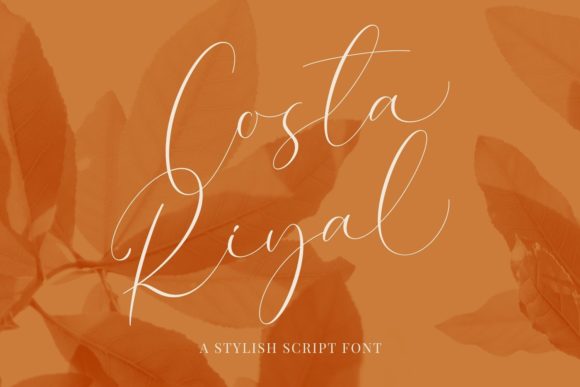
Costa Riyal: A Handwritten Font for Web Design
Working on a boutique online store project, I was looking for a font that could add a personal touch without sacrificing clarity. Costa Riyal caught my eye as a stylish handwritten script that felt both modern and authentic. It wasn’t just about aesthetics—it was about how it would fit into the overall design system and support the brand’s voice.
The first thing I noticed about Costa Riyal is its elegant flow. The strokes are smooth, with subtle variations that make it feel handcrafted rather than machine-generated. This makes it ideal for projects where a human element is important—like a creative portfolio or a coaching website. But I also wanted to see how it performed in different digital contexts, from hero sections to mobile layouts.
Testing Costa Riyal in a Hero Section
I started by placing Costa Riyal in the hero section of a product landing page. The font added a sense of warmth and individuality, which worked well with the brand’s focus on handmade goods. However, I quickly realized that using it for long text wasn’t practical. The script’s fluidity made it less readable at smaller sizes, especially on mobile devices.
So, I decided to use it only for short headlines and CTAs. On a dark background, it stood out beautifully, but I had to adjust the line height and spacing to prevent the characters from feeling cramped. For light backgrounds, I paired it with a contrasting color to ensure legibility without overwhelming the viewer.
Using Costa Riyal in Branding and Layouts
For a coaching website, I used Costa Riyal as the main heading font. It gave the site a more approachable and personal feel, which aligned with the brand’s mission. I also experimented with it on buttons and call-to-action elements. The font’s natural curves made it feel inviting, but I kept the button text short to maintain readability.
In a blog redesign, I used Costa Riyal for the header and subheadings. It created a visual rhythm that complemented the site’s editorial style. However, I avoided using it for body copy and instead paired it with a clean sans serif font for better readability. This combination helped maintain a professional tone while still keeping the design unique.
Readability and Responsive Design Considerations
When working on a responsive layout, I checked how Costa Riyal looked across different screen sizes. On larger screens, it held up well, but on smaller devices, I had to increase the font size slightly to ensure the details were clear. I also tested it over image banners and found that it worked best when placed against solid colors or semi-transparent overlays.
For small buttons or icons, I opted for a bolder weight of the font, which made it more legible without losing its character. In dark mode, I adjusted the color to a lighter shade to avoid contrast issues. These small tweaks made a big difference in the overall user experience.
Font Pairing and Design Integration
One of the strengths of Costa Riyal is its versatility. It pairs well with both serif and sans serif fonts, making it adaptable for different design needs. For a product landing page, I used it alongside a simple sans serif for body text, which created a balanced and cohesive look.
In a digital brand kit, I incorporated Costa Riyal into the logo and social media graphics. Its organic feel made it stand out in a sea of more rigid typefaces. I also explored multilingual support and found that it handled non-Latin characters reasonably well, though some stylistic adjustments might be needed for certain languages.
Practical Tips for Using Costa Riyal
If you’re considering Costa Riyal for your next project, start by testing it in the most prominent areas of your design—headers, CTAs, and logos. Avoid using it for large blocks of text, and always check how it looks on different backgrounds and screen sizes. Make sure to review the font’s weights, alternates, and licensing terms before integrating it into client work or commercial sites.
As a web designer, I appreciate fonts that bring personality without compromising usability. Costa Riyal achieves this balance, offering a fresh, handwritten aesthetic that can elevate a variety of digital projects. Whether you're building a creative portfolio or launching an online store, it’s a great choice for adding a touch of elegance and authenticity.
Ultimately, the key to using Costa Riyal effectively is understanding its strengths and limitations. When used thoughtfully, it can help create a more engaging and memorable online experience for your audience.